Maths Grade 4
Workshop Activities
Printable Worksheets
Exercises and Problems
Online Games
Teachers are free to plan their own lessons, but there are some well-established practices to build on. The following proposals are based on these practices.
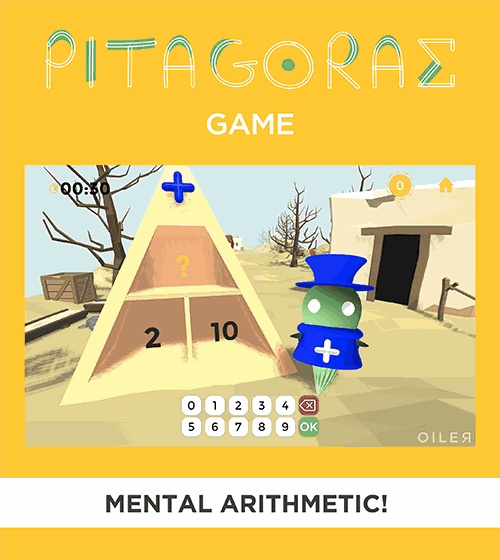
In GRADE 4 MATHS, the NUMBERS area strengthens mental and written calculation, consolidating the different methods and paying attention to estimating and rounding results. Pupils work on fractions (comparing them and recognising equivalent fractions) and on decimal numbers, with attention to comparison, place value notation and operations. They work on multiples and divisors of natural numbers. They learn to choose wisely between mental calculation, written calculation and the calculator, and to check whether results are plausible. Historical number systems are introduced, beginning to place the development of mathematical ideas in time. Work on algebraic symbols resumes, to represent relations and generalise patterns.
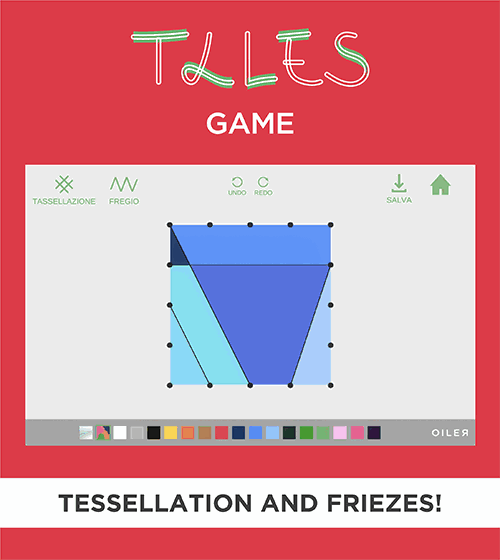
In the SPACE AND FIGURES area, geometric figures are studied in more depth, also with software, looking at perimeter and area, the latter also by cutting figures up and putting them back together. Rotations, translations and symmetries are discussed, above all in the meaningful setting of tessellations. Pupils use the main drawing tools (ruler, set square, compasses), supported by dynamic geometry software. Scale drawings of figures and spaces can also be made.
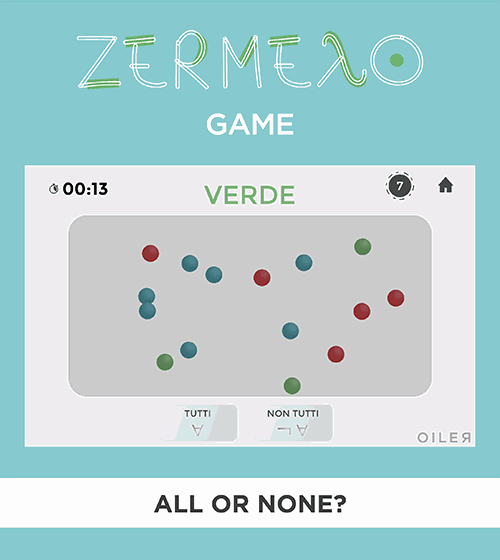
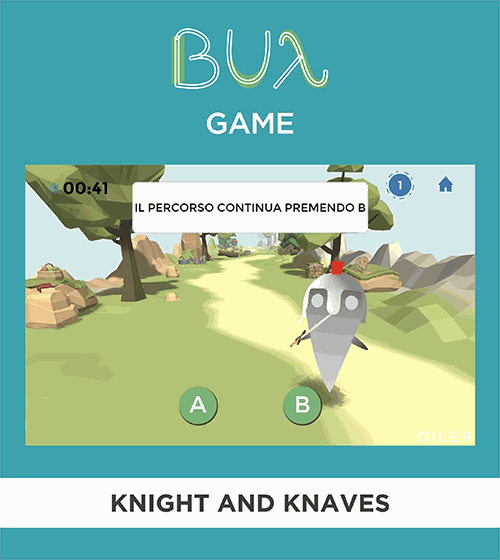
In the LOGIC area, work on quantifiers, predicates, negation and connectives continues. Strategies in two-player games are first discussed. In programming, pupils can start reasoning about more complex algorithms that include loops or make the program take decisions based on a condition ("if... then...").
In the RELATIONS, DATA AND PREDICTIONS area, pupils work on measures and the metric system, also exploring the measurement of time, and convert between the most common units. They work on probability and uncertainty in concrete contexts, using bags of coloured balls, coins and dice. Some more complex combinatorics activities can be tackled. Data are analysed through charts, tables and diagrams, working on frequency, mode and mean.
PROBLEMS are tackled, with attention to their meaning and to explaining and comparing solution strategies. As well as problem solving, pupils work on problem posing.
Below you will find maths activities grouped by topic area, though the grouping is not meant to be rigid.
The proposed activities are part of the pathways available in the tables of the primary school maths section.
No pathways yet.