Numbers, operations, mental arithmetic
Data Sheet

CLASSES: 1 to 5.
Skills:
The pupil:
- calculates confidently, in writing and mentally, with natural numbers;
- solves simple problems in every content area, keeping track of both the solving process and the results;
- describes the process followed and recognises solution strategies different from their own.
METHODS:
Starting from activities on addition and multiplication, the pathway aims to develop number sense and promote mental calculation. Several studies stress the importance of mental calculation not only for understanding arithmetic, but also for moving from an additive to a multiplicative scheme, which leads to a better conceptualisation of number. Mental calculation requires a certain mental agility: one has to be able to change strategy along the way, to accept mistakes as part of the process and to focus on the “here and now”. This suggests the value of classroom settings where pupils calculate and describe to one another how they did their calculations. In this process the teacher plays a key role: highlighting connections and properties, valuing the different approaches with clear language and offering tools for recording strategies together.
There are at least four good reasons to teach mental calculation (Threlfall, 2002): it is the kind of calculation most used in everyday life; it develops number sense; it strengthens problem-solving skills; and it provides a solid basis for learning written calculation. Pupils should also get used to calculating without writing anything down, because the strategies used on paper differ from those of mental calculation.
This pathway was designed by Luigi Bernardi and Giorgia Damiano.
Data Sheet
CLASSES: 1 to 5.
Skills:
The pupil:
- calculates confidently, in writing and mentally, with natural numbers;
- solves simple problems in every content area, keeping track of both the solving process and the results;
- describes the process followed and recognises solution strategies different from their own.
METHODS:
Starting from activities on addition and multiplication, the pathway aims to develop number sense and promote mental calculation. Several studies stress the importance of mental calculation not only for understanding arithmetic, but also for moving from an additive to a multiplicative scheme, which leads to a better conceptualisation of number. Mental calculation requires a certain mental agility: one has to be able to change strategy along the way, to accept mistakes as part of the process and to focus on the “here and now”. This suggests the value of classroom settings where pupils calculate and describe to one another how they did their calculations. In this process the teacher plays a key role: highlighting connections and properties, valuing the different approaches with clear language and offering tools for recording strategies together.
There are at least four good reasons to teach mental calculation (Threlfall, 2002): it is the kind of calculation most used in everyday life; it develops number sense; it strengthens problem-solving skills; and it provides a solid basis for learning written calculation. Pupils should also get used to calculating without writing anything down, because the strategies used on paper differ from those of mental calculation.
This pathway was designed by Luigi Bernardi and Giorgia Damiano.
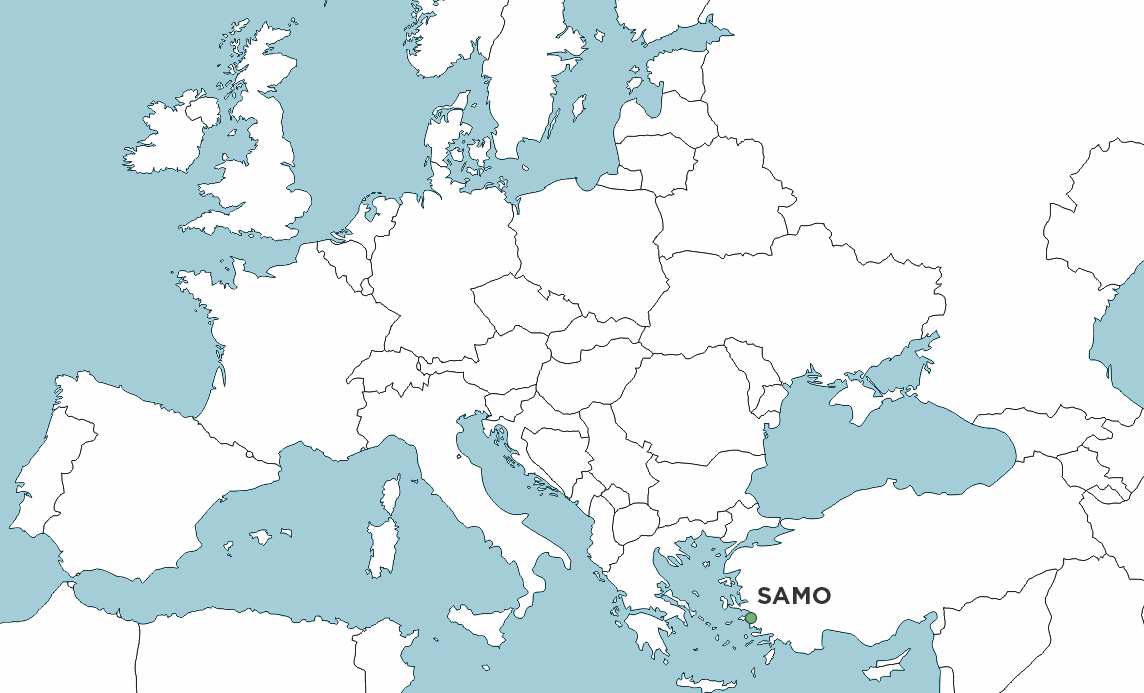
Pitagora of Samos

 The stories about the life of Pythagoras are a mix of legend and reality. Nothing is certain, because he left no writings, but a good deal of information has come down to us through his disciples and some writings of Aristotle, Herodotus and Plato. So we know that he lived in the 6th century BC, that he was born in Greece but travelled widely in Asia Minor and Egypt (it is said that it was Thales who introduced him to the mathematical knowledge of the East), before reaching Italy, at Croton, where he founded a School: a scientific, philosophical and religious community whose disciples followed certain moral rules and pledged not to divulge the philosophical and mathematical knowledge they had learned from their master Pythagoras.
Everyone knows the Pythagorean theorem, but in fact the Pythagorean doctrine was based not on geometry but on arithmetic. The other disciplines that made up mathematics, namely music, geometry and astronomy, were founded on arithmetic. For Pythagoras, number was the essence of all things. Knowing the properties of whole numbers was part of a mystical path, and special representations, such as triangular or pyramidal numbers, took on great importance.
It seems that the Pythagorean school was thrown into crisis by the discovery of irrational numbers, or rather by the fact that the ratio between the diagonal and the side of a square cannot be expressed as a ratio between whole numbers. But that is another story...