Maths Grade 2
Workshop Activities
Printable Worksheets
Exercises and Problems
Online Games
Teachers are free to plan their own lessons, but there are some well-established practices to build on. The following proposals are based on these practices.
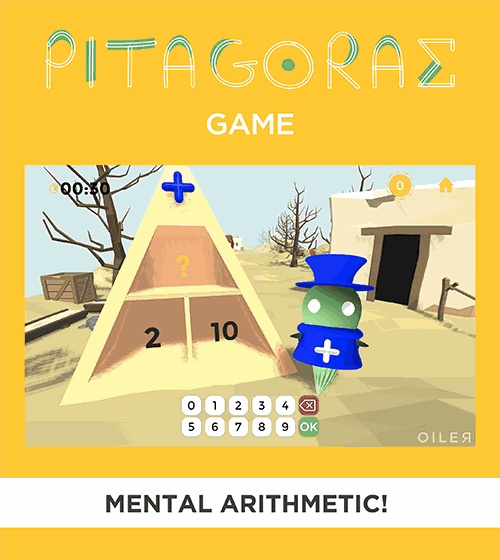
In GRADE 2 MATHS, the NUMBERS area deals with numbers up to about 1,000, comparing and ordering them. Pupils work on place value, mental calculation and putting their calculation strategies into words. The meanings of addition and subtraction, and the strategies for them, are consolidated. Multiplication and multiplication tables are introduced, also with graphic representations, and the ideas of double, half and triple are explored alongside. Numbers are also put to concrete use by exploring money in simple buying-and-selling role play.
In the SPACE AND FIGURES area, lines and their classification are introduced, with a first look at the straight line. Pupils work on drawing and copying, in particular observing and representing symmetries. Angles are first discussed, recognising them also inside polygons. The idea of an equilateral polygon is introduced. Pupils handle solids, recognising and counting the faces, edges and vertices of polyhedra.
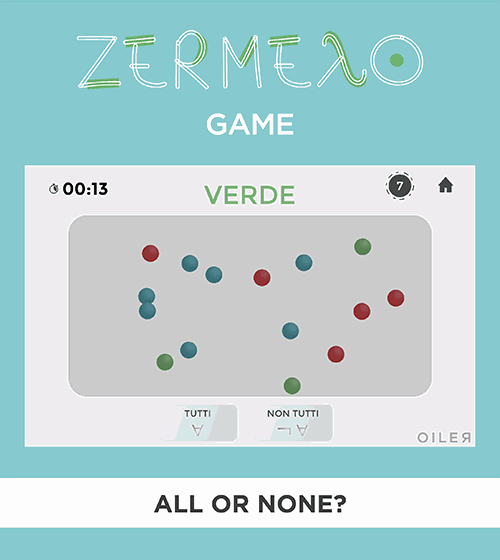
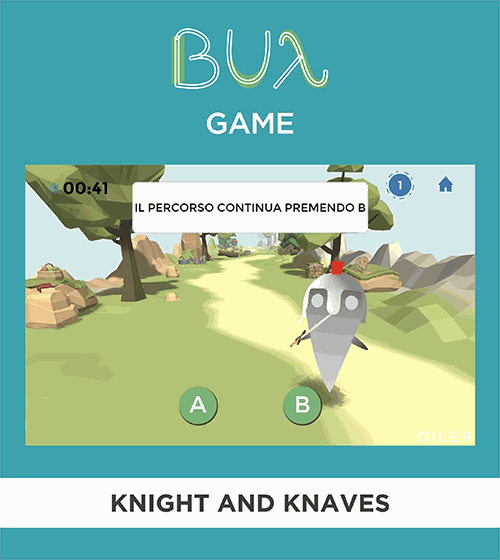
In the LOGIC area, pupils work on quantifiers, on reasoning with quantifiers and on the ideas of true and false. Towards the end of the year, predicates can be introduced, also through links with grammar (verbs and their arguments), together with negation. Pupils write and carry out algorithms for paths on grids, laying the foundations for programming and debugging.
In the RELATIONS, DATA AND PREDICTIONS area, there are combinatorics and counting activities, highlighting the links with multiplication. Data are collected in meaningful contexts and represented with diagrams, charts and tables. A first reflection on probability begins, looking at events from everyday life and classifying them as certain, possible but not certain, or impossible. In simple cases, events are compared to find the most likely one.
PROBLEMS are tackled, with attention to their meaning and to explaining how they were solved.
Below you will find maths activities grouped by topic area, though the grouping is not meant to be rigid.
The proposed activities are part of the pathways available in the tables of the primary school maths section.
No pathways yet.