Probability and diagrams

Data Sheet

OVERALL DURATION OF THE PATH ON AVERAGE: 12 hours
CLASSES: 6, 7 and 8.
Skills:
The pupil:
- analyses and interprets data representations to obtain measures of variability and make decisions;
- supports their own beliefs with suitable examples and counterexamples and with chains of statements, and is willing to change their mind when they recognise the logical consequences of a correct argument;
- finds their way in situations of uncertainty (everyday life, games, ...) by assessing probabilities.
METHODS:
The pathway takes both a quantitative and a qualitative approach to probability, involving the notion of frequency. Cognitive psychology suggests the term natural frequency (Hoffrage et al., 2002) for a ratio that is not expressed by fractions or percentages, but described through concrete situations involving drawing or sharing out, and is therefore intuitive. Using natural frequencies together with practical, engaging materials makes probabilistic concepts and content accessible to primary school pupils (Till and Sproesser, 2020). This paves the way for a later move towards abstraction and the concept of a fraction.
The route was designed by Luigi Bernardi, Dario Domingo.
No activities yet: more are coming soon!
No activities yet: more are coming soon!
Data Sheet
OVERALL DURATION OF THE PATH ON AVERAGE: 12 hours
CLASSES: 6, 7 and 8.
Skills:
The pupil:
- analyses and interprets data representations to obtain measures of variability and make decisions;
- supports their own beliefs with suitable examples and counterexamples and with chains of statements, and is willing to change their mind when they recognise the logical consequences of a correct argument;
- finds their way in situations of uncertainty (everyday life, games, ...) by assessing probabilities.
METHODS:
The pathway takes both a quantitative and a qualitative approach to probability, involving the notion of frequency. Cognitive psychology suggests the term natural frequency (Hoffrage et al., 2002) for a ratio that is not expressed by fractions or percentages, but described through concrete situations involving drawing or sharing out, and is therefore intuitive. Using natural frequencies together with practical, engaging materials makes probabilistic concepts and content accessible to primary school pupils (Till and Sproesser, 2020). This paves the way for a later move towards abstraction and the concept of a fraction.
The route was designed by Luigi Bernardi, Dario Domingo.
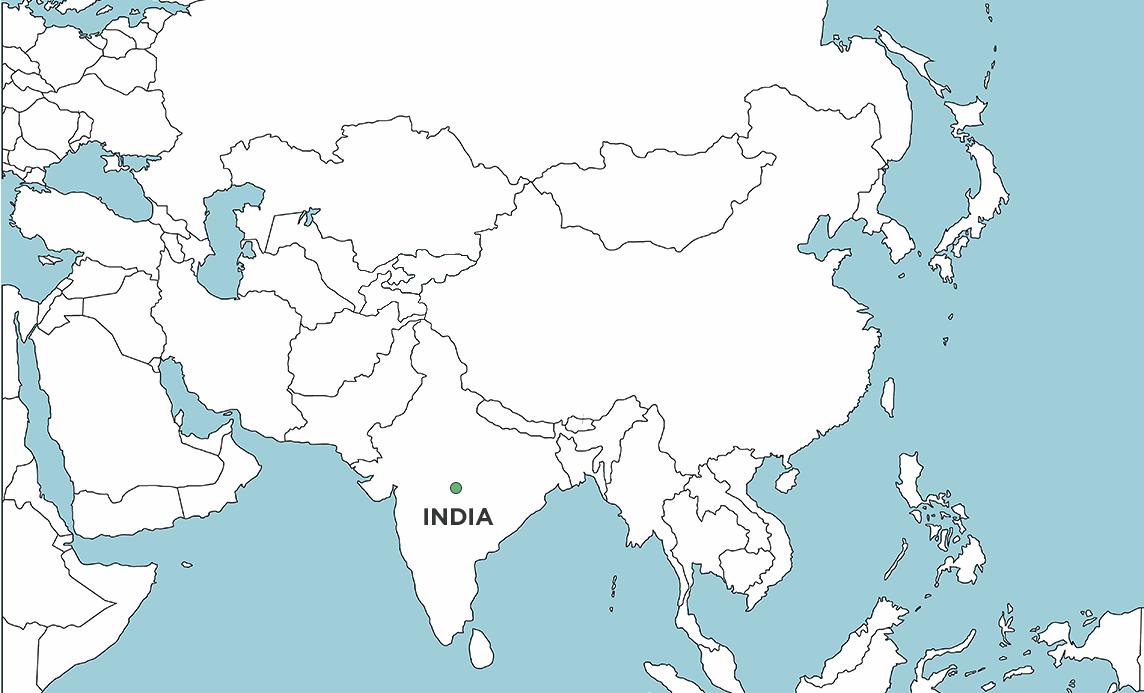
Acharya Pingala

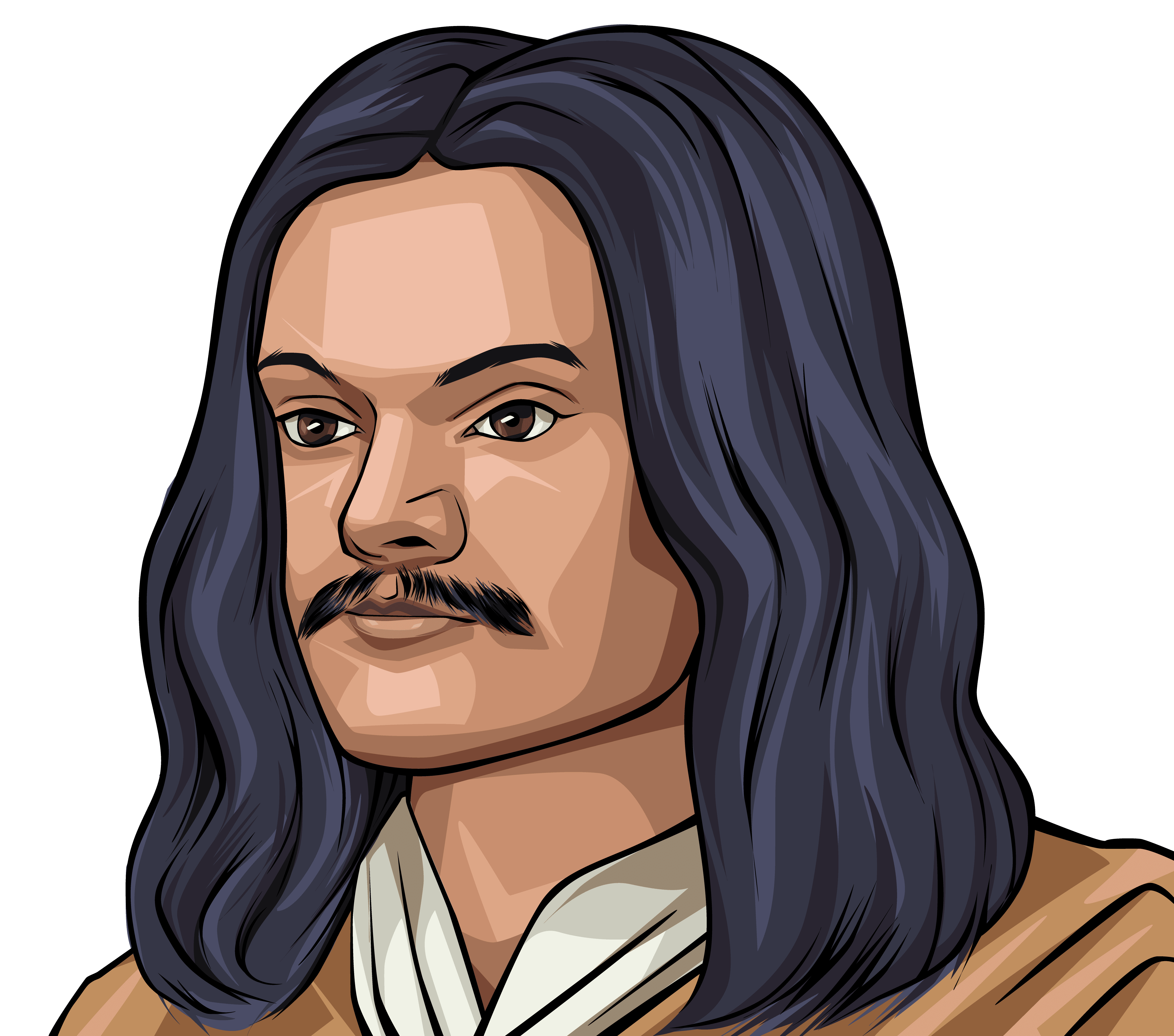 Pingala was an Indian poet and mathematician. Little is known about him: we know he was born in India, but not in which city. One of his works has come down to us, the Chandahśāstra, which shows his gifts as both poet and mathematician: in it Pingala analyses Sanskrit poetry, written in the ancient Indian language, mathematically. It is in fact one of the first treatises on combinatorics, complete and clear thanks to its many examples. It contains early ideas not only of combinatorics, but also of binary notation, the Fibonacci sequence and the use of zero. More precisely, Pingala studies how short syllables (like “a”) and long syllables (like “atà”) alternate: he marks long syllables with 1 and short ones with 0, and so turns a line of verse into a sequence of 0s and 1s. For example, a line of 6 syllables that sounds like a-a-atà-a-a-atà corresponds to 001001. If a line has n syllables, there are 2n possible sequences, and each of them corresponds to the binary notation of a number. This is also why the play money in our pathway is based on the powers of 2.
Now consider that a short syllable S (that is, “a”) takes one beat, while a long syllable L (that is, “atà”) takes two beats. Then one beat can hold only one short syllable S (1 possibility), two beats can hold two short syllables SS or one long syllable L (2 possibilities), three beats can hold SSS, SL and LS (3 possibilities), and four beats can hold SSSS, LL, SSL, LSS, SLS (5 possibilities). Surprisingly, the numbers of possibilities we have found (1, 2, 3, 5, ...) are exactly the Fibonacci numbers; in particular, each number is the sum of the two before it. Pingala then studies how many of the sequences of n syllables have a given number k of short syllables, finding what we now call binomial coefficients, that is, the numbers in Pascal's triangle, which Italians call Tartaglia's triangle and Indians call Halayudha's triangle, after a 10th-century mathematician who wrote a commentary on Pingala's Chandaḥśāstra!