Cartesian plane
The online game DEKART GAME accompanies the activities.
Data Sheet

CLASSES: 4 and 5.
Skills:
The pupil:
- looks for data to obtain information and builds representations (tables and charts);
- describes, names and classifies figures by their geometric properties, measures them, and designs and builds concrete models of various kinds;
- uses geometric drawing tools.
METHODS:
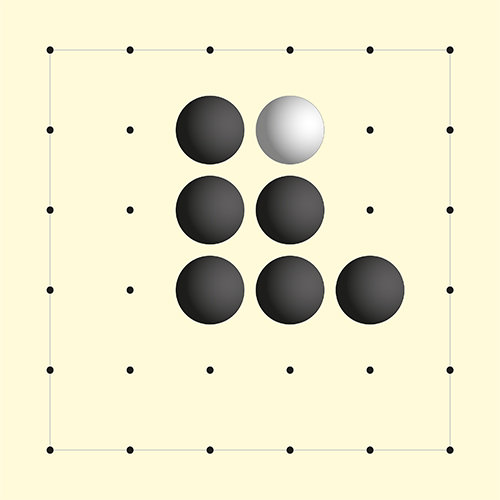
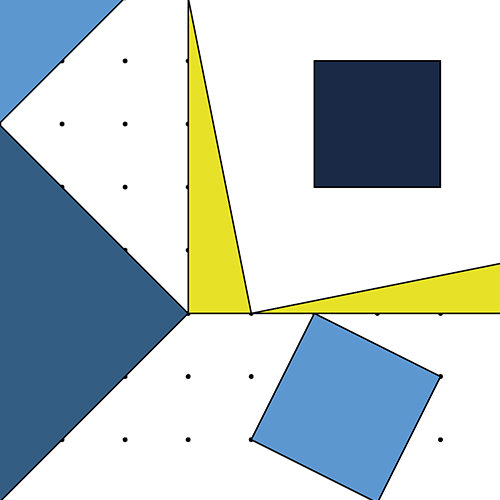
The pathway introduces the first elements of the Cartesian plane through games and worksheets, strengthening the link between numbers and geometric objects already introduced with Tales. Knowledge is stimulated through a variety of approaches and images of the Cartesian plane (Levenberg, 2015). Dekart is also a good opportunity to place the topics in a historical context, that is, to begin presenting mathematics as a sociocultural process (Furinghetti, 1997). Teachers can describe the figure of Descartes, and also talk about Pythagoras and Pick.
MULTIDISCIPLINARY LINKS:
technology.
This pathway was designed by Luigi Bernardi and Giorgia Damiano.

The online game DEKART GAME accompanies the activities.
Data Sheet
CLASSES: 4 and 5.
Skills:
The pupil:
- looks for data to obtain information and builds representations (tables and charts);
- describes, names and classifies figures by their geometric properties, measures them, and designs and builds concrete models of various kinds;
- uses geometric drawing tools.
METHODS:
The pathway introduces the first elements of the Cartesian plane through games and worksheets, strengthening the link between numbers and geometric objects already introduced with Tales. Knowledge is stimulated through a variety of approaches and images of the Cartesian plane (Levenberg, 2015). Dekart is also a good opportunity to place the topics in a historical context, that is, to begin presenting mathematics as a sociocultural process (Furinghetti, 1997). Teachers can describe the figure of Descartes, and also talk about Pythagoras and Pick.
MULTIDISCIPLINARY LINKS:
technology.
This pathway was designed by Luigi Bernardi and Giorgia Damiano.
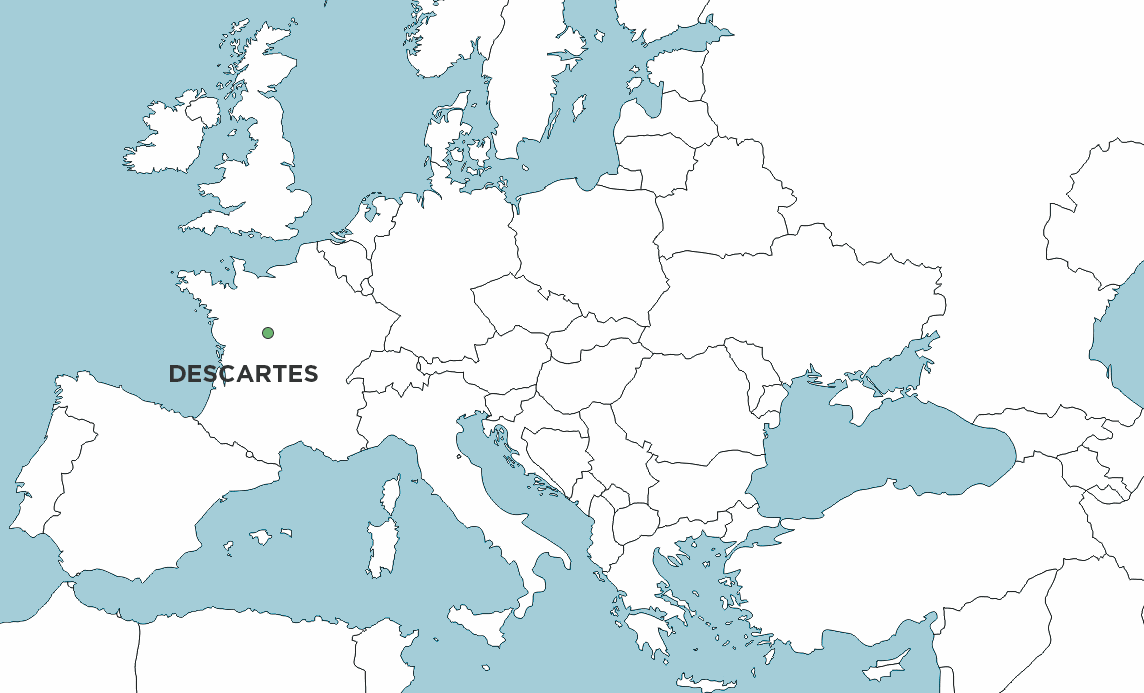
René Descartes

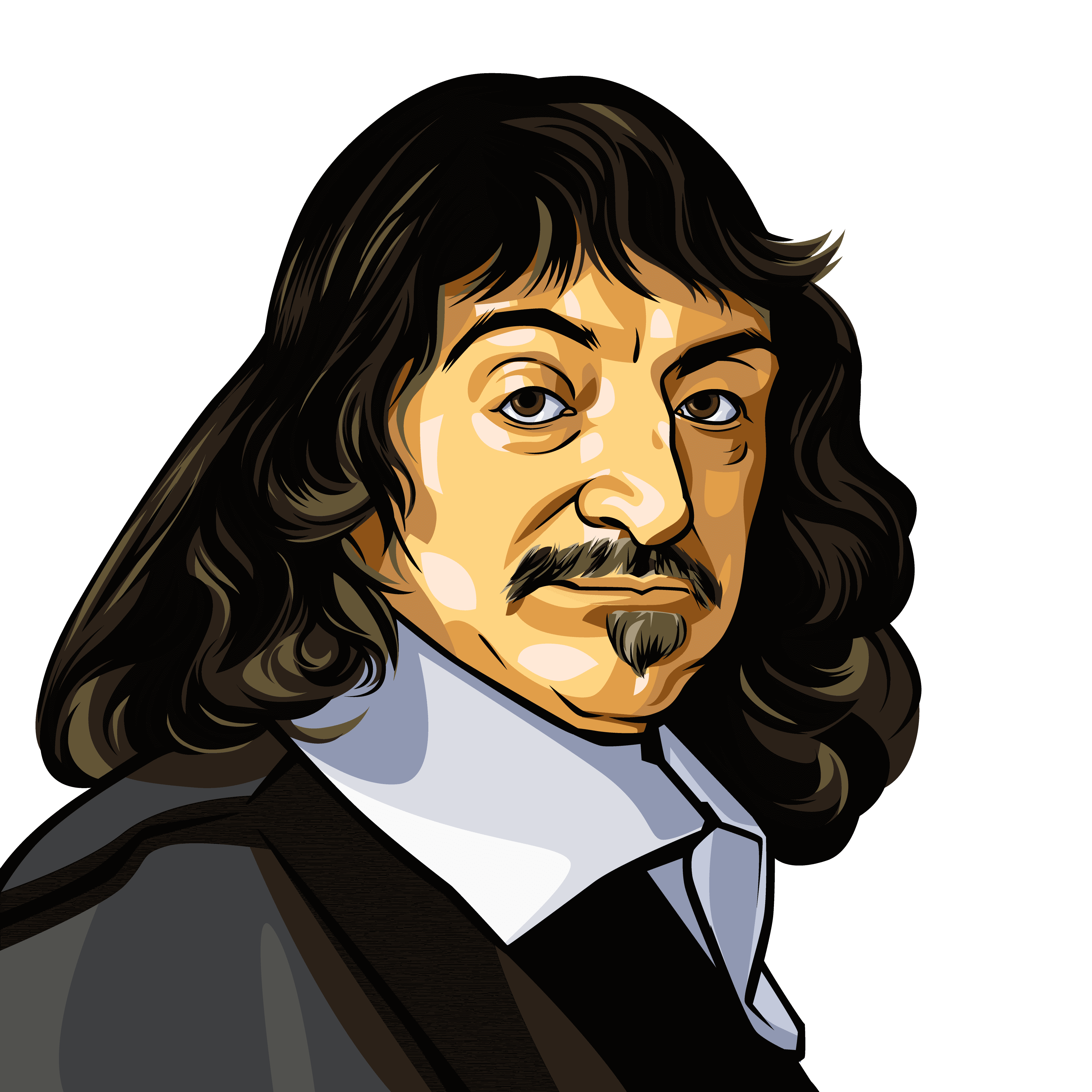 René Descartes was a mathematician and philosopher, like many of his predecessors and contemporaries (Thales, Pythagoras, Galileo, Pascal, ...), even though he had a degree in law. He came from a wealthy family of noble origins. This spared him from having to look for a steady job and allowed him to travel, meet people and write about the many subjects that interested him: music, physics, natural sciences and, of course, philosophy and mathematics. For a short time he also experienced military life. After Galileo was condemned by the Church in 1633 for teaching the Copernican theory, Descartes, perhaps out of fear, abandoned the writing of a large scientific treatise that supported the same theory. The text was published after his death.
In a broad sense, the word Cartesian is today a synonym for precise, logical, rational.
Just as his philosophy put reason at the centre, his mathematics put method at the centre. The first step of the method, when solving a geometric problem, is to translate the geometric relationships into algebraic language: the product a × b stands for the rectangle with sides a and b, the sum a + b is the segment made by joining segments a and b, and so on, up to more complex relationships. The second step is to use another letter, x, to represent a segment we do not know yet. Descartes' method consists in “considering the problem as already solved”, that is, making no difference between x and the other letters and writing them all in the same expression. This leads to what we now call an equation (which contains, precisely, variables and constants).
Why is Descartes' geometry called analytic? The term had a different meaning from today's: the word comes from the ancient methods of analysis and synthesis. In solving a problem, analysis covers the various stages of the search, investigation and discovery, conjecture and the confirmation or refutation of the conjecture: analysis is therefore untidy and creative. Synthesis, on the other hand, sets out in an orderly way the steps that lead from the data and what is known to the solution. So the method devised by Descartes is analytic because it is a tool for investigation, useful for solving the hardest problems.
Today by analytic geometry we mean the geometry of coordinates, which are called Cartesian coordinates. To tell the truth, there are no Cartesian coordinates in Descartes' geometry, nor is there the vertical axis of the Cartesian plane, but the name remains a tribute to the great mathematician.
Descartes died in Stockholm. The French ambassador to Sweden, his friend, wrote of him in his epitaph: “approaching the mysteries of nature with the laws of mathematics, he dared to hope to open the secrets of both with the same key”.