How do you use Oiler Cards: tens and ones?
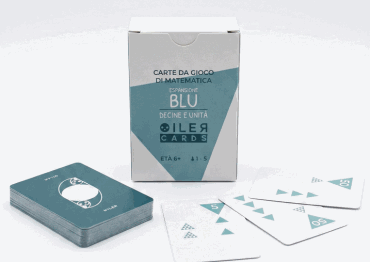
The Blue expansion of OILER CARDS shows the numbers from 1 to 100: quantities are shown through structured groupings of five and ten elements. This visual layout makes it possible to tell ones from tens at a glance, supporting the understanding of the decimal place-value system and the development of a sense of the additive decomposition of numbers. The deck is also useful for practising mental arithmetic, thanks to a representation that recalls the logic of the Soroban abacus.
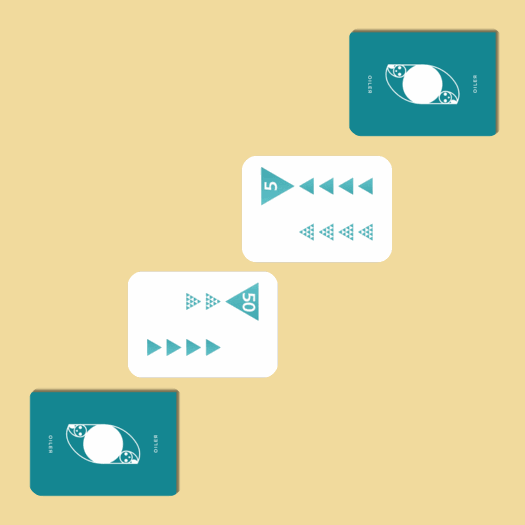
WAR

2-5 players
The deck is split into equal piles among the players (if you think it appropriate, you can use only part of the deck). Each player keeps their pile face down without looking at the cards. On each turn, the players turn over the top card of their pile at the same time. Whoever has the highest card wins the turn and takes the cards turned over by the opponents. Since the cards go from 1 to 100 and are all different, a tie is not possible. To make the game livelier and faster, an extra rule applies: whoever loses the hand, besides giving up their face-up card, must also give the winner a face-down card from the top of their pile. The winner puts all the cards received at the bottom of their pile. Whoever runs out of cards loses: the last player left with cards wins the game.
Variations:
Variations:
- Instead of one card per turn, each player plays two cards per turn: whoever has the highest sum takes the cards. This variation is harder but useful for practising mental arithmetic.
SORTED!
2-5 players
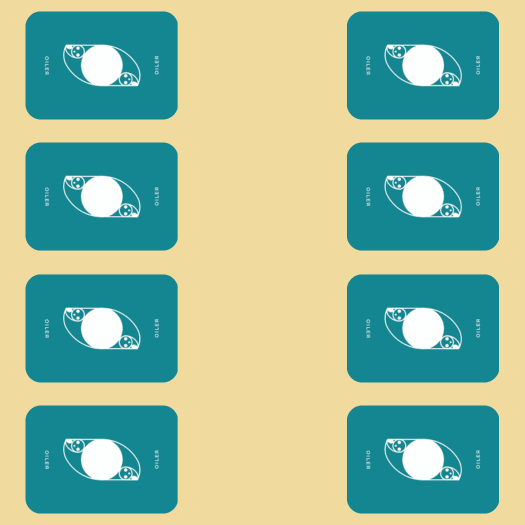
At the start of the game, decide whether the order to follow will be ascending (from smallest to largest) or descending (from largest to smallest). Each player is dealt 4 cards face down. At the signal, all the players pick up their cards and try to lay them out on the table in front of them in the agreed order as quickly as possible. The first player to put them in order shouts "Sorted!" and the game stops. The other players check that the order is correct: if the cards are in the right order, the player who said "Sorted!" scores a point and the other players score zero; if the player got the order wrong, all the other players score a point and that player scores zero. The cards used are shuffled back into the deck and a new hand begins. The first player to reach 3 points wins.
Variations:
Variations:
- To make the game harder, deal 5 or 6 cards to each player instead of 4. The more cards there are, the harder it is to put them in order quickly. You can also ask the players to sort the cards while holding them in their hand like a fan instead of laying them on the table, which also trains fine motor skills.
SENSE THE ORDER
3-5 players
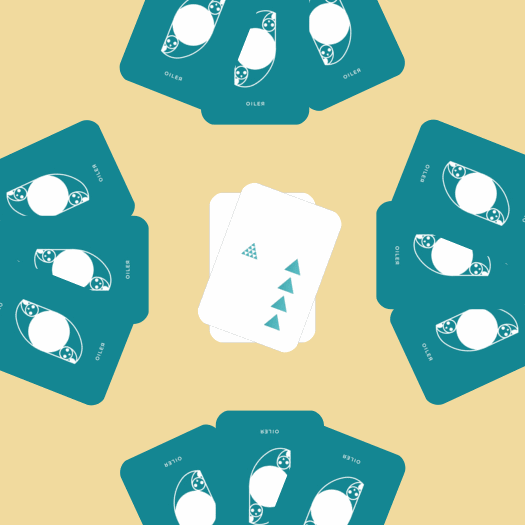
This is a cooperative game that requires listening skills and being in tune with each other, because the players cannot talk to each other or make signals. The group's goal is to discard all the cards in ascending order in the middle of the table. Each player is dealt 3 cards. There is no fixed turn order: whoever thinks they have the lowest card of all those in play must discard it, placing it face up in the middle of the table. If a player plays a card but another player realises they have a lower card in hand, the game stops immediately and the group has lost. If the group manages to place all the cards in ascending order without mistakes, the game is won.