Number games and tales

Data Sheet

CLASSES: 4 and 5; the Rubik's Cube activities from grade 1.
Skills:
The pupil:
- reads and understands texts involving logical and mathematical aspects;
- builds arguments by formulating hypotheses, supporting their own ideas and engaging with other people's points of view;
- looks for data to obtain information and builds representations.
METHODS:
The MUSA activities are characterised by problem solving, play, recursive reasoning and a narrative setting. They call on different skills and competences, including algorithmic thinking.
An algorithm requires carrying out the actions needed to reach a clearly defined goal (Doğan, 2020). The algorithmic thinking used to reach the solution involves and develops the ability to break a problem down into single steps, to recognise patterns and regularities, and to abstract (Blannin & Symons, 2019). Later on, these skills can be used in computer programming.
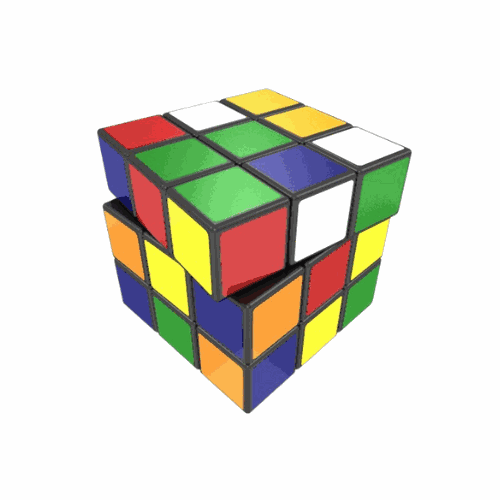
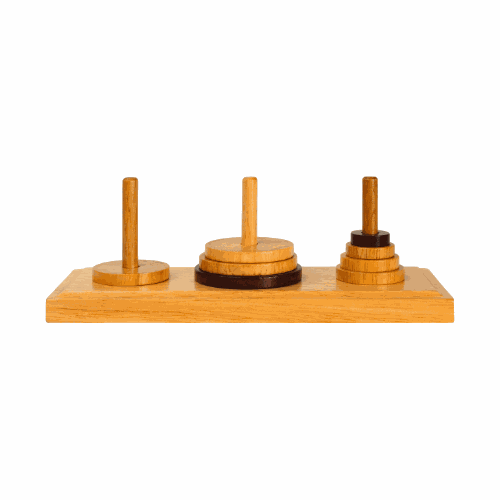
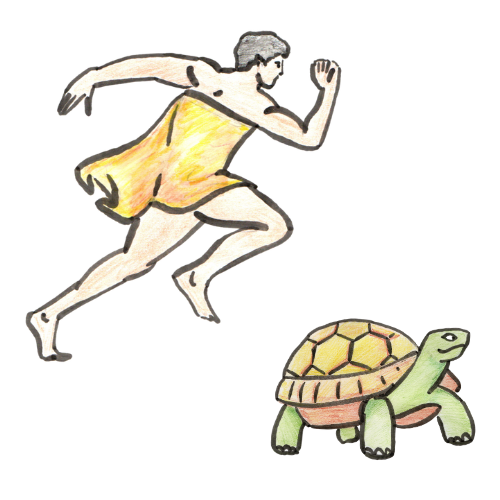
Interpreting and reading stories, such as “The Seven Messengers” by Dino Buzzati, can help build a sense of number, quantity and counting, and so mathematise a situation (Hintz & Smith, 2022). Some of the stories in the pathway encourage reflection on the concept of infinity. The Tower of Hanoi problem introduces inductive thinking and involves knowing (implicitly or explicitly) the properties of odd and even numbers (Merrotsy, 2015). The Rubik's Cube helps visualise and interpret moves geometrically and develops cognitive skills and attitudes such as patience, perseverance, problem solving and logical reasoning (Orizzontescuola, 2024).
MULTIDISCIPLINARY LINKS:
English, technology.
This pathway was designed by Luigi Bernardi.
No activities yet: more are coming soon!
No activities yet: more are coming soon!
Data Sheet
CLASSES: 4 and 5; the Rubik's Cube activities from grade 1.
Skills:
The pupil:
- reads and understands texts involving logical and mathematical aspects;
- builds arguments by formulating hypotheses, supporting their own ideas and engaging with other people's points of view;
- looks for data to obtain information and builds representations.
METHODS:
The MUSA activities are characterised by problem solving, play, recursive reasoning and a narrative setting. They call on different skills and competences, including algorithmic thinking.
An algorithm requires carrying out the actions needed to reach a clearly defined goal (Doğan, 2020). The algorithmic thinking used to reach the solution involves and develops the ability to break a problem down into single steps, to recognise patterns and regularities, and to abstract (Blannin & Symons, 2019). Later on, these skills can be used in computer programming.
Interpreting and reading stories, such as “The Seven Messengers” by Dino Buzzati, can help build a sense of number, quantity and counting, and so mathematise a situation (Hintz & Smith, 2022). Some of the stories in the pathway encourage reflection on the concept of infinity. The Tower of Hanoi problem introduces inductive thinking and involves knowing (implicitly or explicitly) the properties of odd and even numbers (Merrotsy, 2015). The Rubik's Cube helps visualise and interpret moves geometrically and develops cognitive skills and attitudes such as patience, perseverance, problem solving and logical reasoning (Orizzontescuola, 2024).
MULTIDISCIPLINARY LINKS:
English, technology.
This pathway was designed by Luigi Bernardi.
Abū Jaʿfar Muḥammad ibn Mūsā al-Khwārizmī


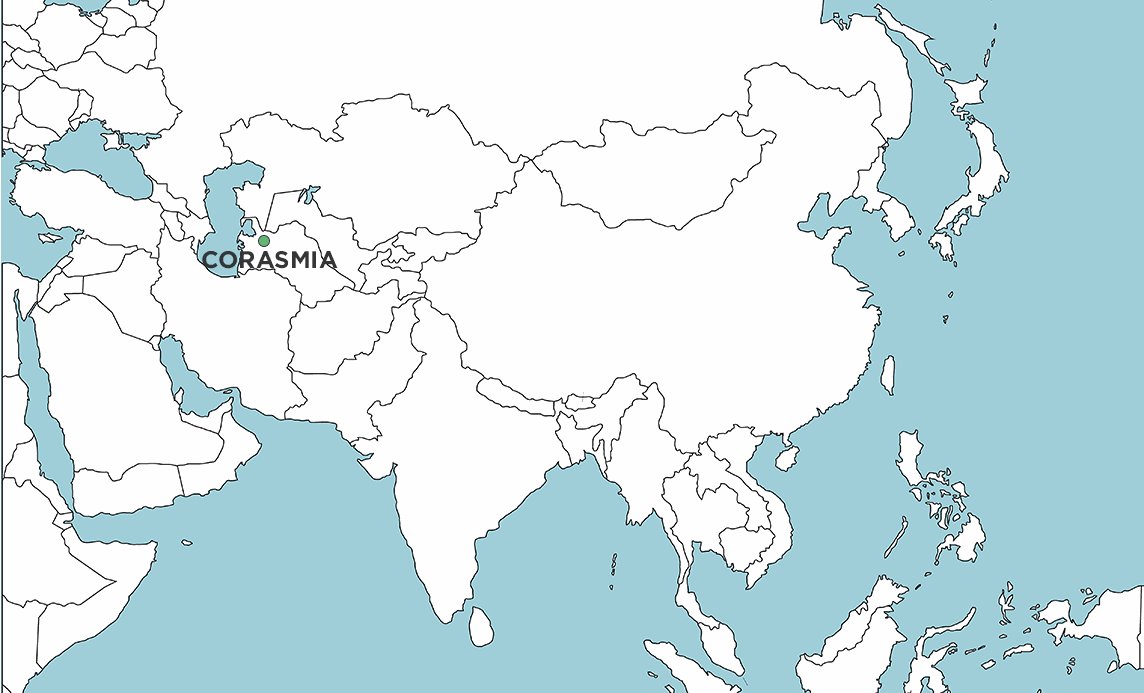
Muḥammad Al-Khwārizmī was a Persian scholar, considered the father of algebra. He came from a region of Asia called Khwārezm, from which his name comes (much as we speak, for example, of Leonardo da Vinci).
Our word algorithm, meaning a mechanical procedure for carrying out calculations or other operations, comes from his name. The word algebra is linked to him too, because it comes from al-jabr, a term that appears in the title of one of his most important works: “al-Kitāb al-mukhtaṣar fī ḥisāb al-jabr wa al-muqābala”. Out of curiosity, the prefix “al” is an article, while “jabr” could be translated as “restoring”, referring to the process of “restoring” an equation.
The book spread in Europe thanks to the Englishman Robert of Chester in the 12th century, who translated part of it into Latin. A few years later Gerard of Cremona produced the first complete Latin translation of the work.
In his treatise al-Khwārizmī explains how to solve linear and quadratic equations. He distinguishes several cases, because negative numbers were not accepted at that time: in our terms, the coefficients, the constant term and the solutions of an equation could only be positive. For example, the two equations
x 2 + 2x = 3 (which has 1 as its solution)
x 2 + 4 = 4x (which has 2 as its solution)
had to be treated separately, with two different solving procedures. For us, instead, both equations have the form ax 2 + bx + c = 0 , where a, b, c are positive or negative numbers, and we have a single formula that works for every quadratic equation. Of course, our symbols were not used at that time, which made every step much more complicated.
Al-Khwārizmī also worked on astronomy and geography. In particular, he seems to have coordinated the work of 70 geographers who were to draw a map of the whole world (that is, of the world known at the time).
He lived in Baghdad and also oversaw the translation of Greek scientific manuscripts.