Numbers and combinatorics



Data Sheet

CLASSES: 1 to 5.
Skills:
The pupil:
- looks for data to obtain information and builds representations (tables and charts);
- recognises and quantifies, in simple cases, situations of uncertainty.
METHODS:
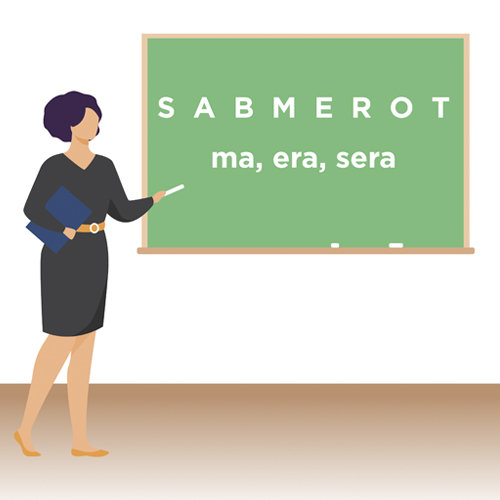
The pathway introduces elements of combinatorics through various tools, including anagrams. Pupils are invited to think and look for a way to order the objects so as to count them better. Combinatorics problems set in concrete contexts help develop enumeration processes, as well as conjectures and generalisations. Pupils have no difficulty finding strategies when the context is meaningful (English, 2005). Although the aim of the activities is not to reach combinatorics formulas, older pupils may manage to generalise what they have found.
(Batanero, Godino, & Navarro-Pelayo, 1997) show that combinatorial reasoning is not limited to solving problems about combinations or arrangements, but includes a wide range of concepts and problem-solving skills. Most of these elements are a fundamental tool for developing probabilistic thinking.
This pathway was designed by Luigi Bernardi and Giorgia Damiano.

Data Sheet
CLASSES: 1 to 5.
Skills:
The pupil:
- looks for data to obtain information and builds representations (tables and charts);
- recognises and quantifies, in simple cases, situations of uncertainty.
METHODS:
The pathway introduces elements of combinatorics through various tools, including anagrams. Pupils are invited to think and look for a way to order the objects so as to count them better. Combinatorics problems set in concrete contexts help develop enumeration processes, as well as conjectures and generalisations. Pupils have no difficulty finding strategies when the context is meaningful (English, 2005). Although the aim of the activities is not to reach combinatorics formulas, older pupils may manage to generalise what they have found.
(Batanero, Godino, & Navarro-Pelayo, 1997) show that combinatorial reasoning is not limited to solving problems about combinations or arrangements, but includes a wide range of concepts and problem-solving skills. Most of these elements are a fundamental tool for developing probabilistic thinking.
This pathway was designed by Luigi Bernardi and Giorgia Damiano.
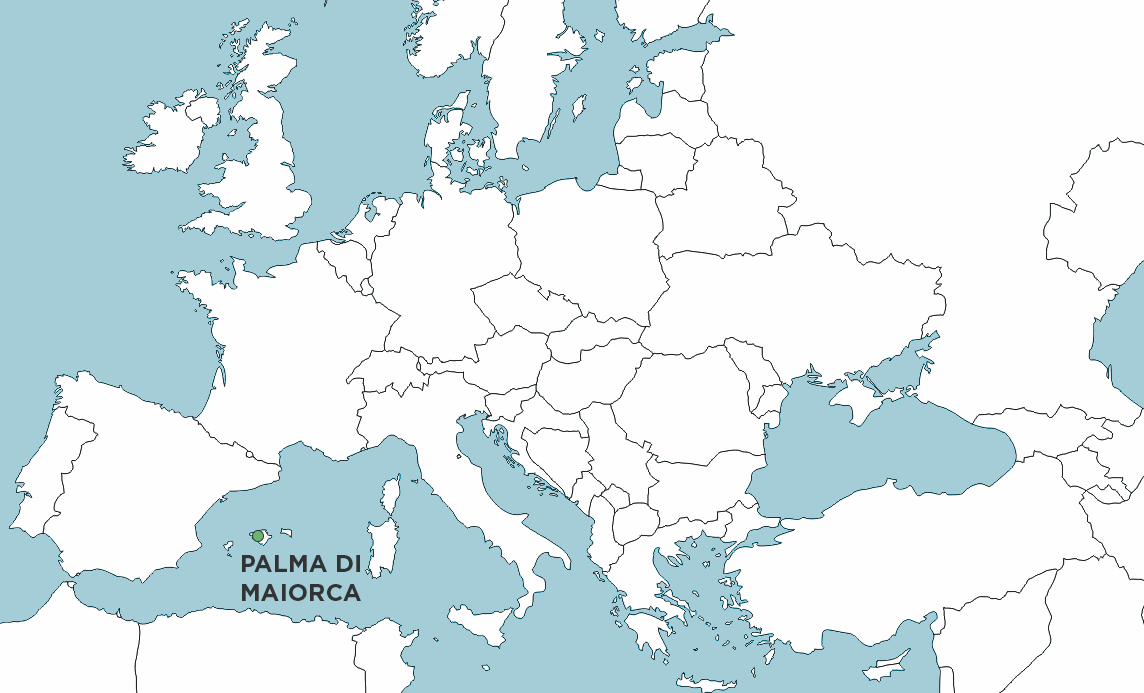
Ramon Llull

 Ramon Llull was a Spanish writer, theologian and logician. He travelled across much of Europe, partly to spread his ideas and his doctrine. In his work Ars Magna he sets out a method of reasoning and of classifying knowledge: concepts are represented by geometric or algebraic symbols so that they can be combined in every possible way. We like to think that this idea, later taken up in Leibniz's better-known Ars Combinatoria, indirectly anticipates modern combinatorics.
“Lull's art serves to speak without judgement of what one in fact does not know” Descartes