
Decimal numbers, engineering, physics


Data Sheet

CLASSES: 3, 4 and 5.
Skills:
The pupil:
- recognises and uses different representations of mathematical objects (decimal numbers, fractions, percentages, scale drawings, ...);
- develops a positive attitude towards mathematics through meaningful experiences that show how the mathematical tools they have learned are useful in the real world;
- looks for data to obtain information and builds representations (tables and charts), and also draws information from data shown in tables and charts.
METHODS:
The KOLMAN activities deal with decimal numbers and introduce them in a hands-on way, engaging pupils in measuring activities in meaningful contexts. Measuring can help pupils build the concept of a decimal number and encourages the use of the number line as a model for representing quantities (Pramudiani et al., 2011). In other words, measuring, as an individual and a social activity, helps develop a sense of decimal numbers (Hunter & Anthony, 2003).
For these activities we therefore work within RME (Realistic Mathematics Education), which aims to develop a deep and lasting understanding of mathematics.
MULTIDISCIPLINARY LINKS:
technology.
This pathway was designed by Luigi Bernardi.
No activities yet: more are coming soon!
No activities yet: more are coming soon!
Data Sheet
CLASSES: 3, 4 and 5.
Skills:
The pupil:
- recognises and uses different representations of mathematical objects (decimal numbers, fractions, percentages, scale drawings, ...);
- develops a positive attitude towards mathematics through meaningful experiences that show how the mathematical tools they have learned are useful in the real world;
- looks for data to obtain information and builds representations (tables and charts), and also draws information from data shown in tables and charts.
METHODS:
The KOLMAN activities deal with decimal numbers and introduce them in a hands-on way, engaging pupils in measuring activities in meaningful contexts. Measuring can help pupils build the concept of a decimal number and encourages the use of the number line as a model for representing quantities (Pramudiani et al., 2011). In other words, measuring, as an individual and a social activity, helps develop a sense of decimal numbers (Hunter & Anthony, 2003).
For these activities we therefore work within RME (Realistic Mathematics Education), which aims to develop a deep and lasting understanding of mathematics.
MULTIDISCIPLINARY LINKS:
technology.
This pathway was designed by Luigi Bernardi.
Creola Katherine Coleman Johnson

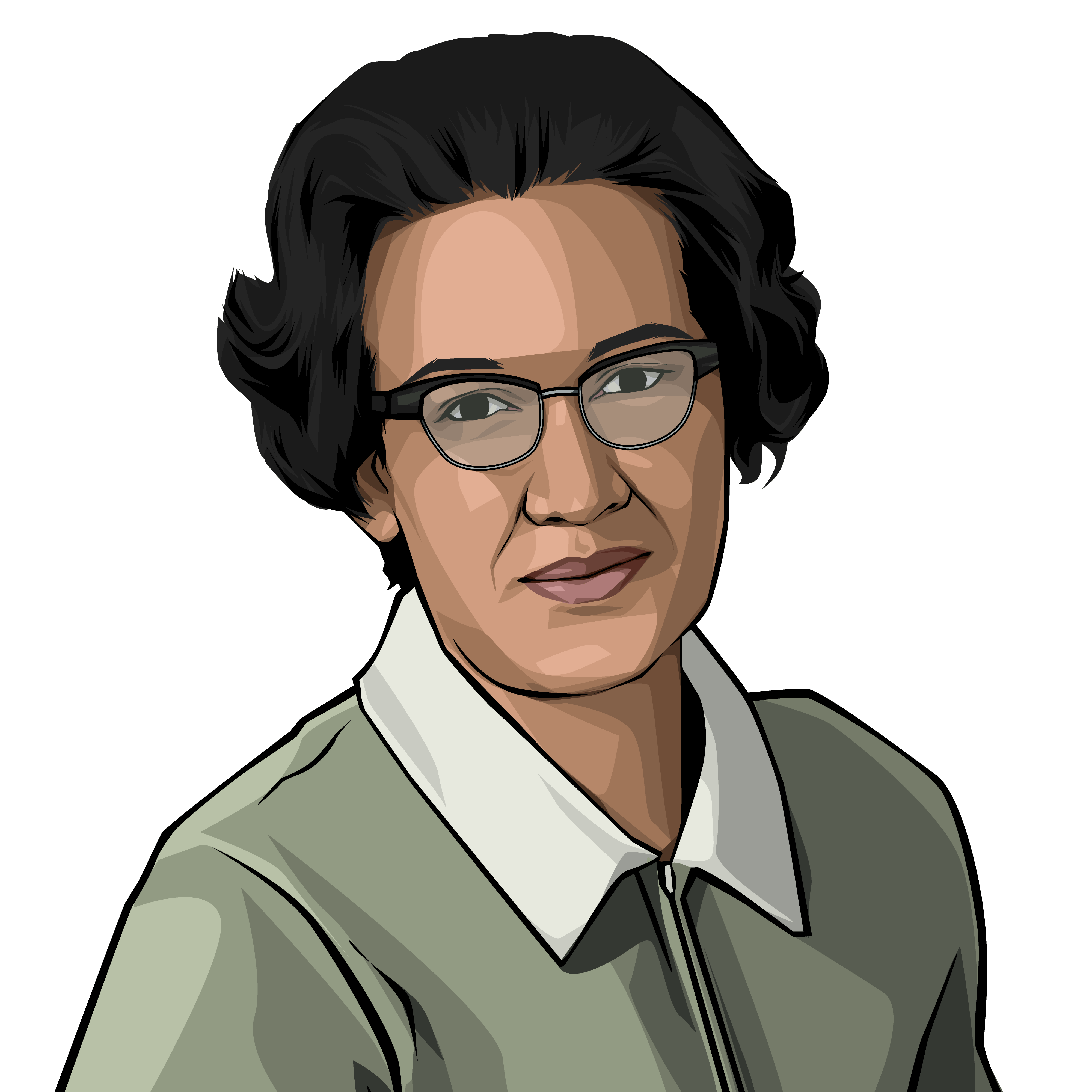
Creola Katherine Coleman, better known by the surname of her second husband, Johnson, or by that of her first husband, Goble, was an American mathematician.
She showed an early talent for mathematics and had to move away to study, because the county where she lived did not allow Black students to go on to secondary school (Creola Katherine was African American). She graduated in mathematics very young, went on to further study and worked as a teacher.
In 1953 she joined NACA (later NASA), which hired African American women to carry out calculations. The work meant doing calculations by hand on data from aircraft black boxes, or on the effects of strong winds on flights. She was soon moved to the section dealing with space missions. There her job was to calculate rocket trajectories, launch windows and return paths, including for flights to the Moon (which required outstanding skill in calculation and in working with decimal numbers). She faced many difficulties caused by racial segregation (for example, Black staff had to eat separately from white staff and use separate toilets), but her work was highly valued, so much so that she was the only woman admitted to the design meetings.
In 1962, when NASA began to use electronic computers to calculate orbital flight, her role was scaled back for a while. However, she was asked to check the calculations for the Mercury mission: the astronaut John Glenn had made it a condition for flying, as he apparently trusted her, and her alone. Her knowledge of physics, computer science and aerospace engineering also made her essential to the later space missions, on which she kept working. In 1970 she helped plan the emergency return of the Apollo 13 astronauts, who had had to abort their mission after an oxygen tank exploded.
To find out more about the life of Katherine Johnson, we recommend the film “Hidden Figures” (2016).